

Back to Top

Dave's Picks

Dave Speaks | NPR Interactive | Plastics

Dave Speaks | NPR Interactive | Plastics

Fascinating piece on how cities around the world are addressing pollution caused by automobiles, at a time when climate change remains a battle to be fought and won.

Just for fun, we’re trying something a little different for this post — Click comment to chime in on worldwide automobile bans and regulations.

Every year, the average American goes through more than 250 pounds of plastic waste, and much of that comes from packaging. So what do we do with it all?

Your recycling bin is part of the solution, but many of us are confused about what we should be putting in there. What’s recyclable in one community could be trash in another.

This interactive explores some of the plastics the recycling system was designed to handle and explains why other plastic packaging shouldn’t go in your recycling bin.

Let’s take a look at some items you might pick up at the grocery store.
Dave's Picks | NYT | Cities Worldwide Are Reimagining Their Relationship With Cars

Dave's Picks | NYT | Cities Worldwide Are Reimagining Their Relationship With Cars

Originally published By Somini Sengupta and Nadja Popovich | Illustrations by Tim Peacock for NYT | Nov. 14, 2019

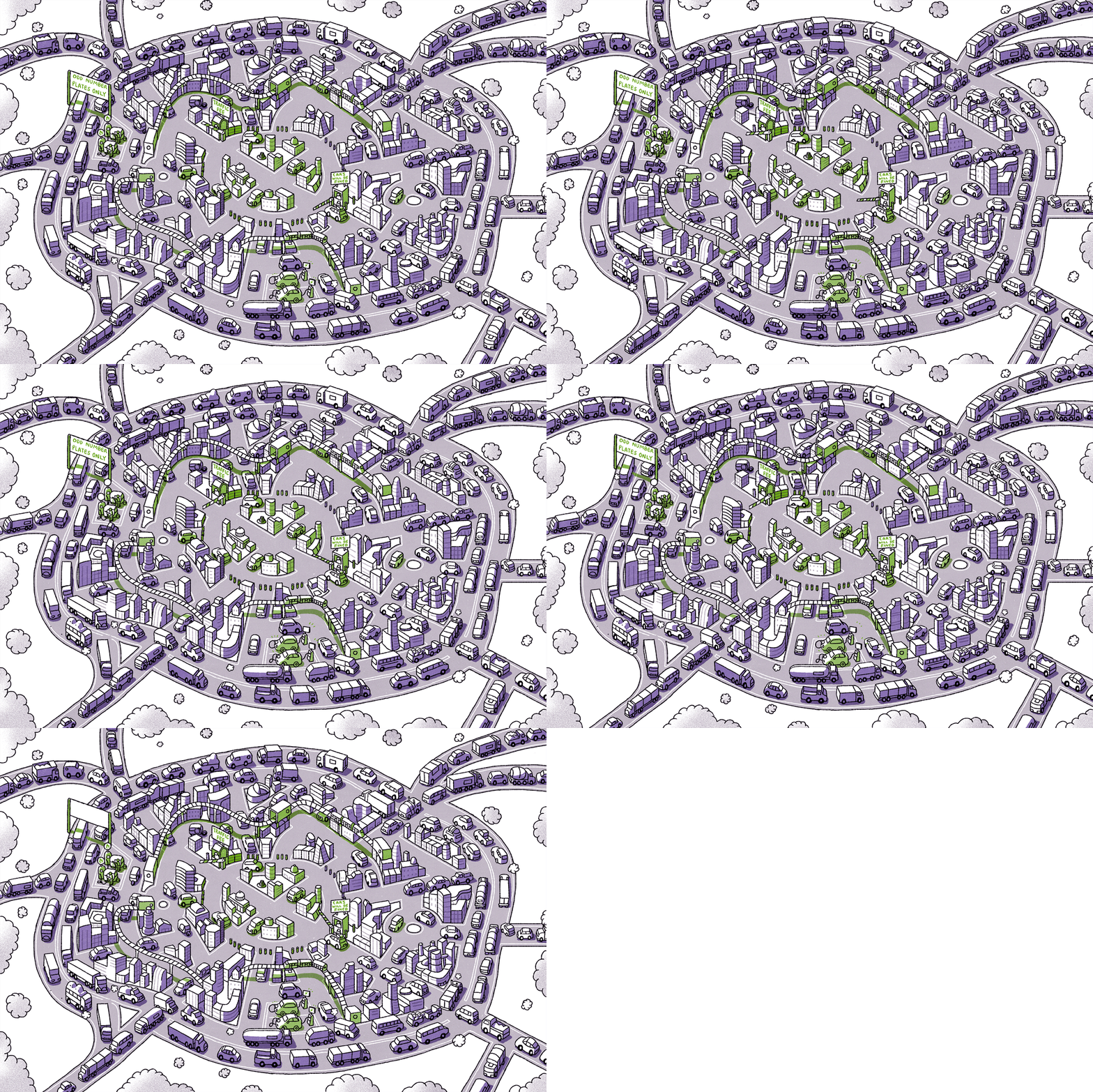
At a time when most of humanity lives in cities, where do cars belong — especially the old, polluting ones that make city air foul for people to breathe?

That question has vexed city officials across the world. Many are trying a variety of measures to reimagine the role of automobiles, the machines that forever changed how people move.

The immediate motivation is clear: City dwellers want cleaner, healthier air and less traffic. The long-term payoffs can be big: Curbing transportation emissions, which account for nearly a fourth of all greenhouse gases, is vital to staving off climate catastrophes.

Dave's Picks | Coca-Cola Officially Named the World’s Biggest Plastic Polluter

Dave's Picks | Coca-Cola Officially Named the World’s Biggest Plastic Polluter

Originally published on High Snob Society by By Ian Servantes in Life 04 November 2019

Coca-Cola has emerged as the world’s biggest polluter of plastics, according to a new audit from Break Free From Plastics. 72,000 volunteers from across the world dug through streets, beaches, and waterways in search of plastic waste and found a staggering amount originating from the soda company. Of the 75,000 total pieces of waste collected, 11,732 belonged to Coke. That’s more than three times the next three biggest polluters combined.

Nestle, PepsiCo, and Mondelez International (the company behind Sour Patch, Toblerone, and other snacks) were the next biggest polluters. Coca-Cola led the pollution in most regions, coming in first in Africa and Europe and second in Asia and South America. Nestle and the Solo Company were the top two polluters in America.

CNN | Microsoft tried a 4-day workweek in Japan. Productivity jumped 40%

CNN | Microsoft tried a 4-day workweek in Japan. Productivity jumped 40%

A growing number of smaller companies are adopting a four-day workweek. Now the results of a recent trial at Microsoft (MSFT) suggest it could work even for the biggest businesses.

The company introduced a program this summer in Japan called the "Work Life Choice Challenge," which shut down its offices every Friday in August and gave all employees an extra day off each week.

The results were promising: While the amount of time spent at work was cut dramatically, productivity — measured by sales per employee — went up by almost 40% compared to the same period the previous year, the company said in a statement last week.

NYT Photo Essay | Your Tales of Subway Escalator Hell

NYT Photo Essay | Your Tales of Subway Escalator Hell

Okay folks, time to discuss the dire Metro subway escalator situation. Peep this photo essay and don’t hesitate to tag @NYTMetro on social media to get their attention.

Out of 472 subway stations, only about 25 percent are accessible to riders in wheelchairs. Some stations are so deep beneath the city that your impromptu cardio session could mean walking up 100 steps to the street.

Subway riders already have to deal with a variety of daily indignities: unexpected delays, sweltering cars with no air conditioning and broken ticket machines. But as service on New York City’s subway slowly improves, the escalators are getting worse.